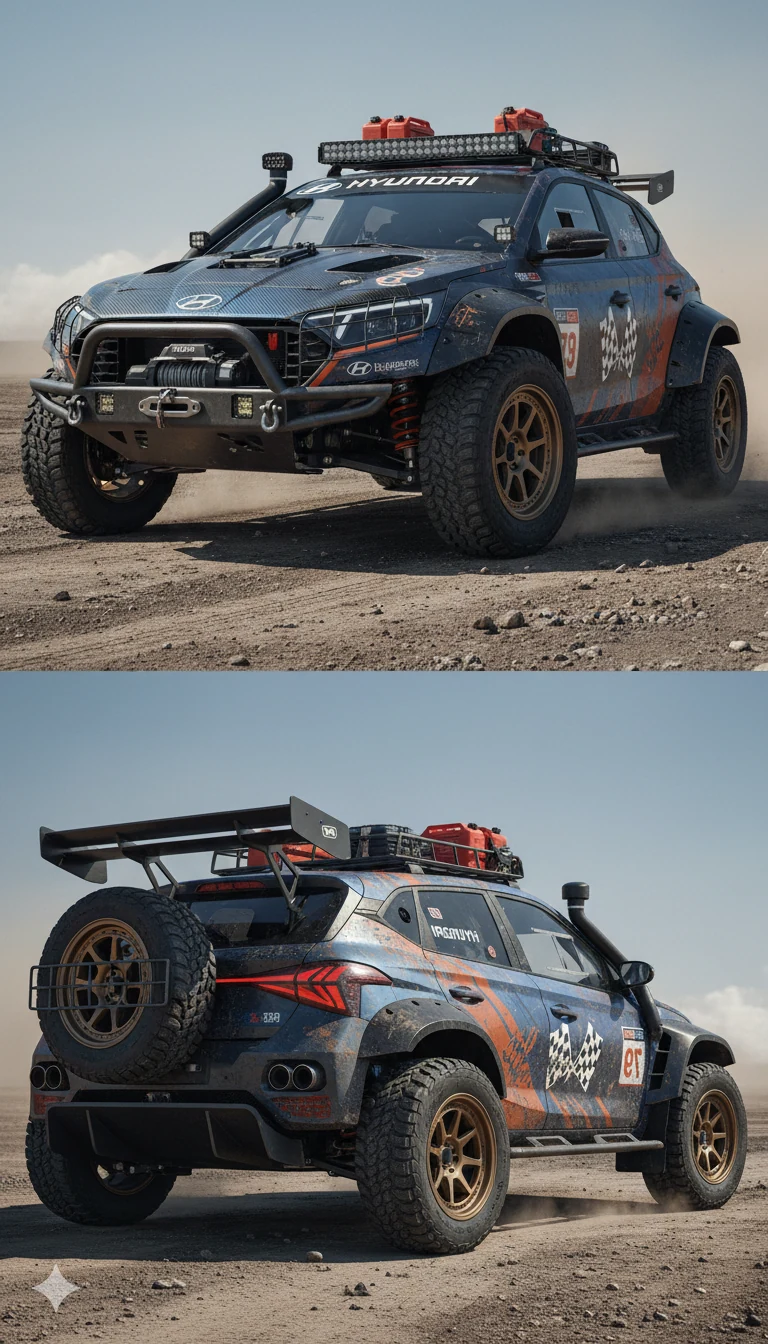
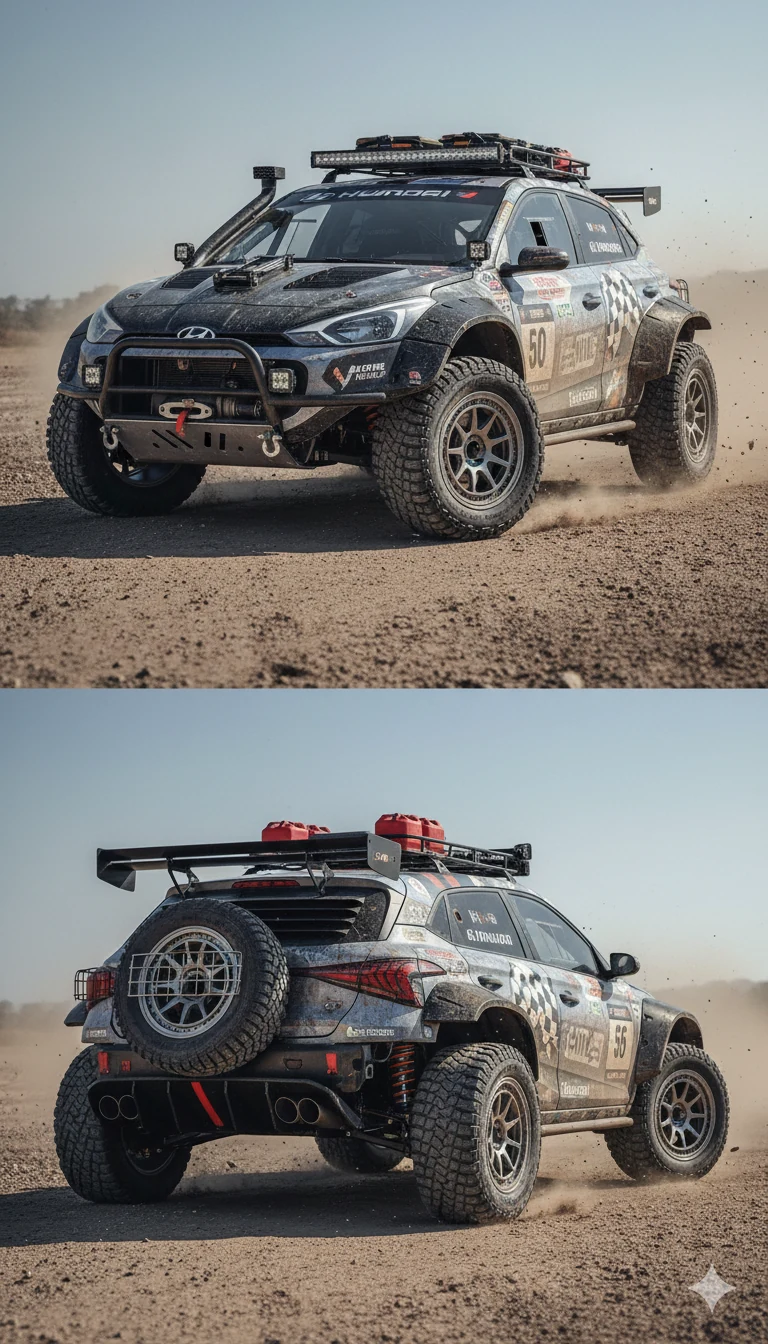
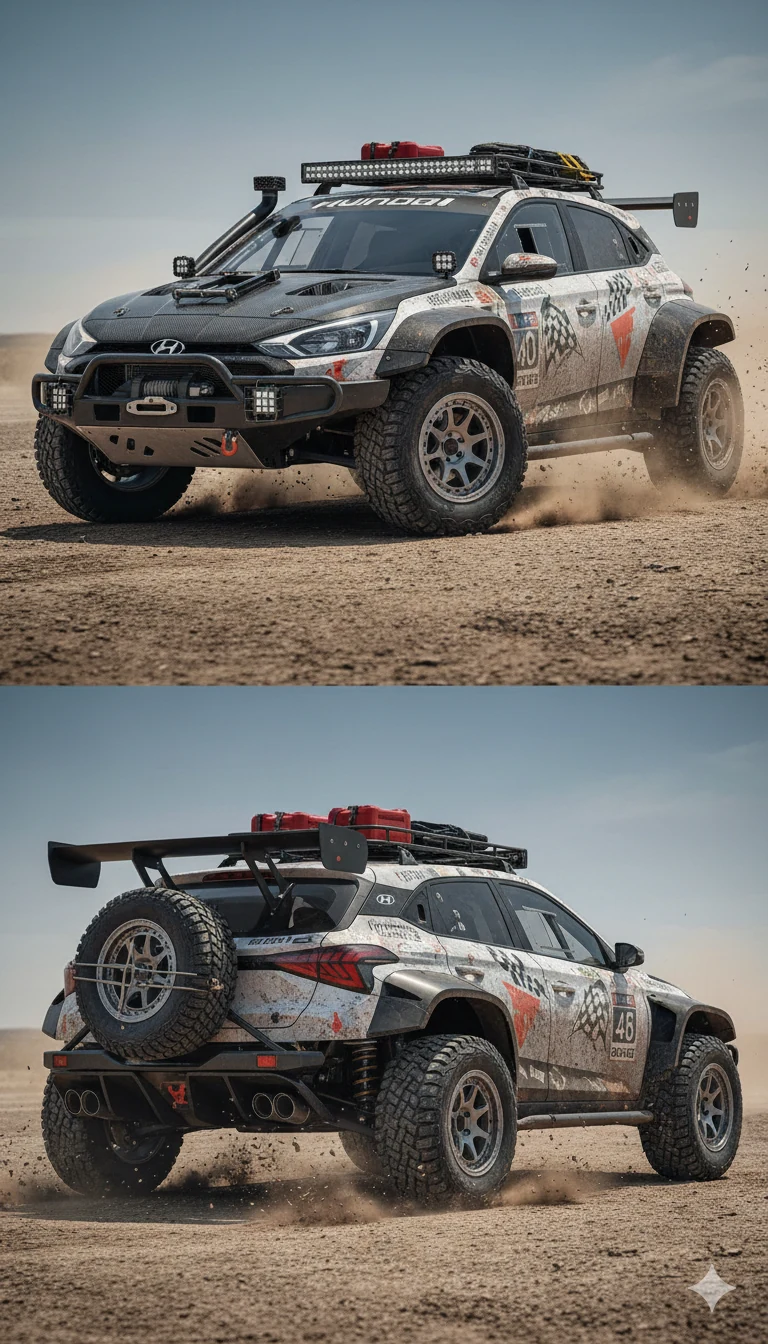
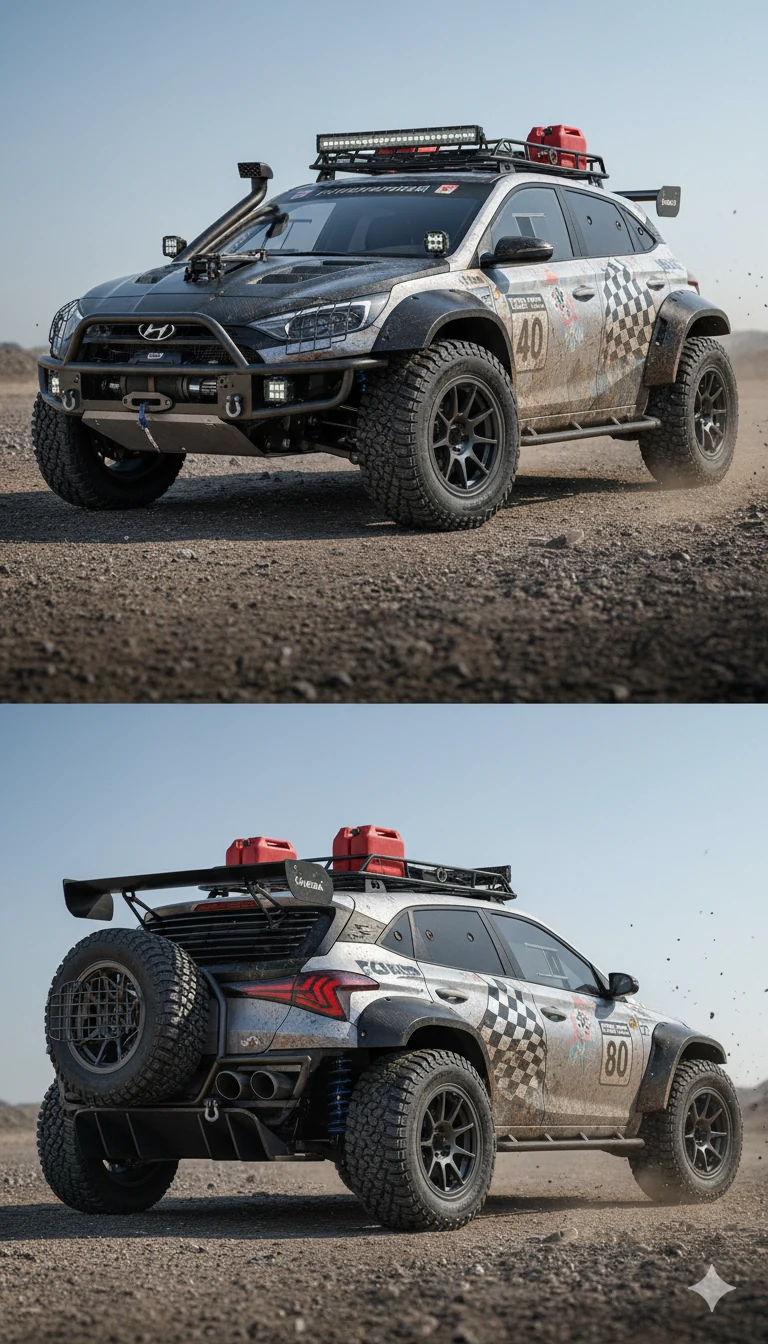
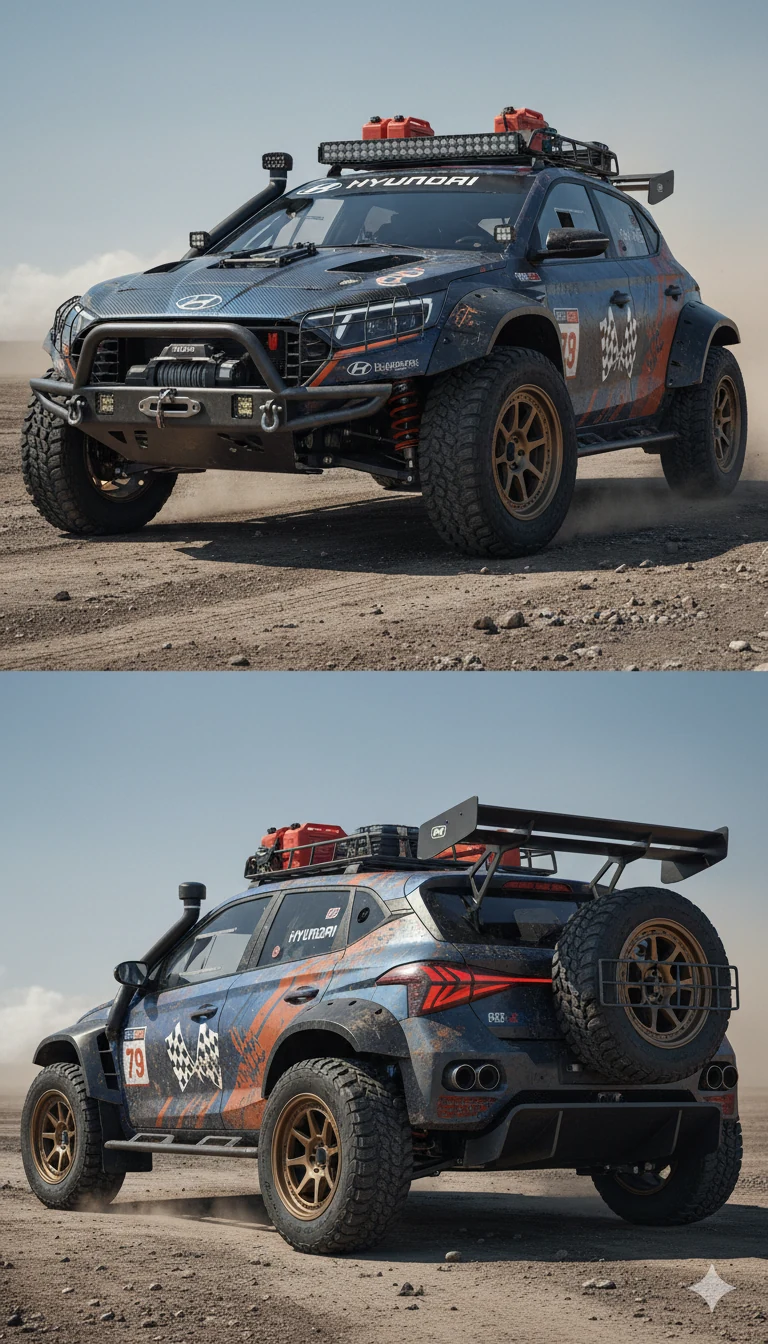
Hyundai i20 (2020-2023) — a sedan in factory form. The set below holds 5 renders of that same body rebuilt as a Off-Road build, so you can compare the changes side by side instead of taking them on trust. The donor car is the MK-3 generation, which is why the glasshouse and the shoulder line stay exactly where the factory put them.
The overland look is built from function, not fashion. Taller sidewalls, smaller diameter wheels, a lift that keeps suspension travel, and protection where the body would otherwise meet rock. Roof racks, snorkels, light bars and spare-wheel carriers are not decoration: each one solves a problem. What makes a render convincing is weight. Steel bumpers sit low, the stance stays level, and the wheel-to-arch gap is consistent front and rear. The palette is deliberately dull, because a vehicle that spends its life covered in dust does not stay glossy for long.
Same donor car, different rules: every other Hyundai i20 build is one click away in the sidebar, and the Off-Road category hub collects the same treatment applied to other cars.
Questions about Off-Road builds
What defines an overland build?
Clearance, protection and payload. Lift, bumpers, racks and tyres all follow from those three requirements rather than from styling.
Why are the wheels smaller than on a street build?
A taller sidewall absorbs terrain and protects the rim. Big rims with low-profile tyres are a street decision, not an off-road one.
 Opel Insignia3 renders
 Ford Transit Custom2 renders
 Skoda Octavia1 renders