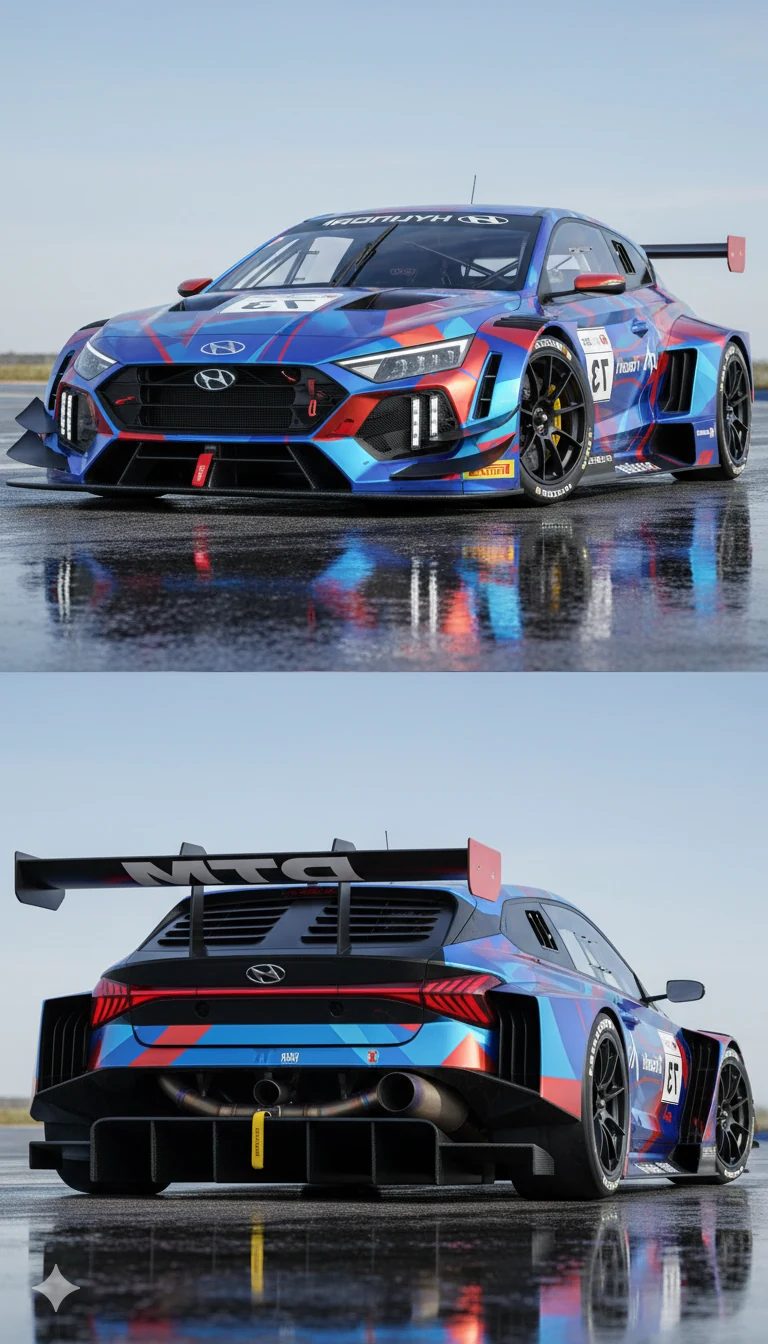
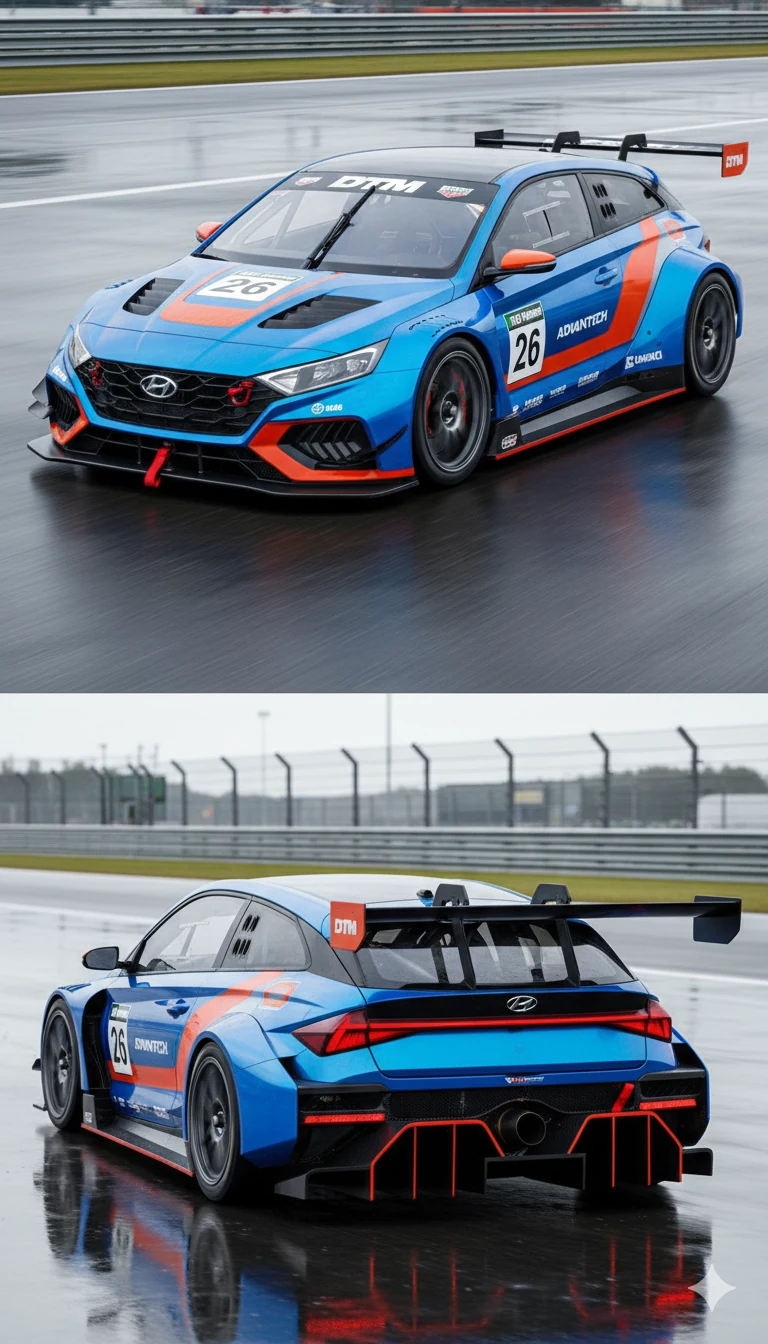
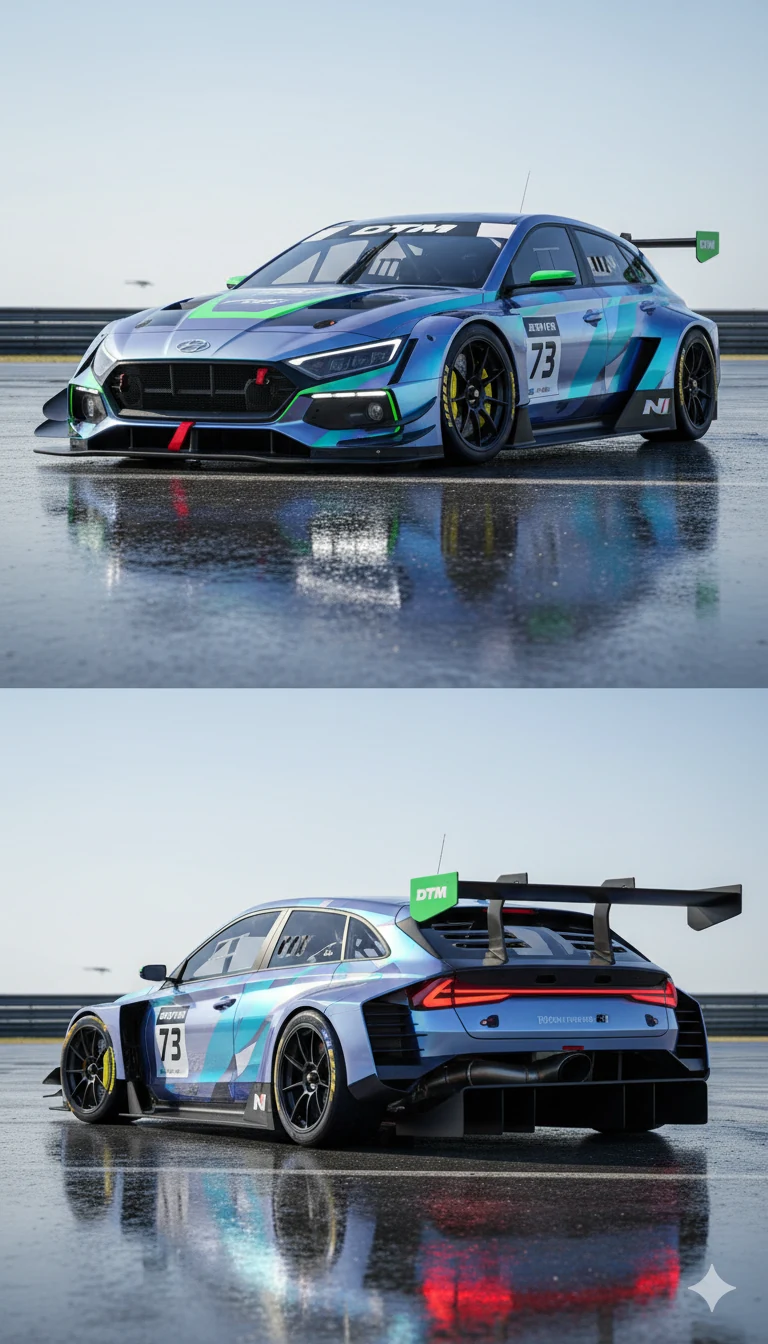
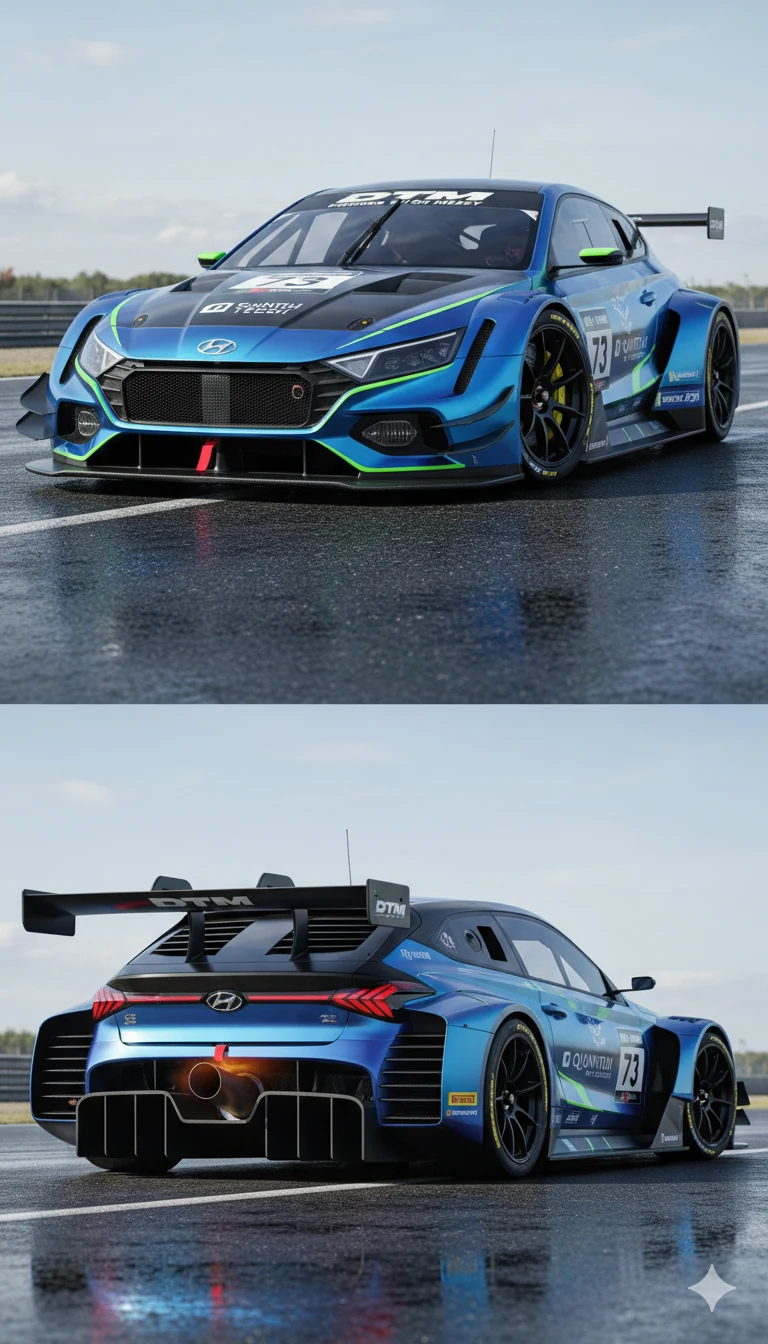
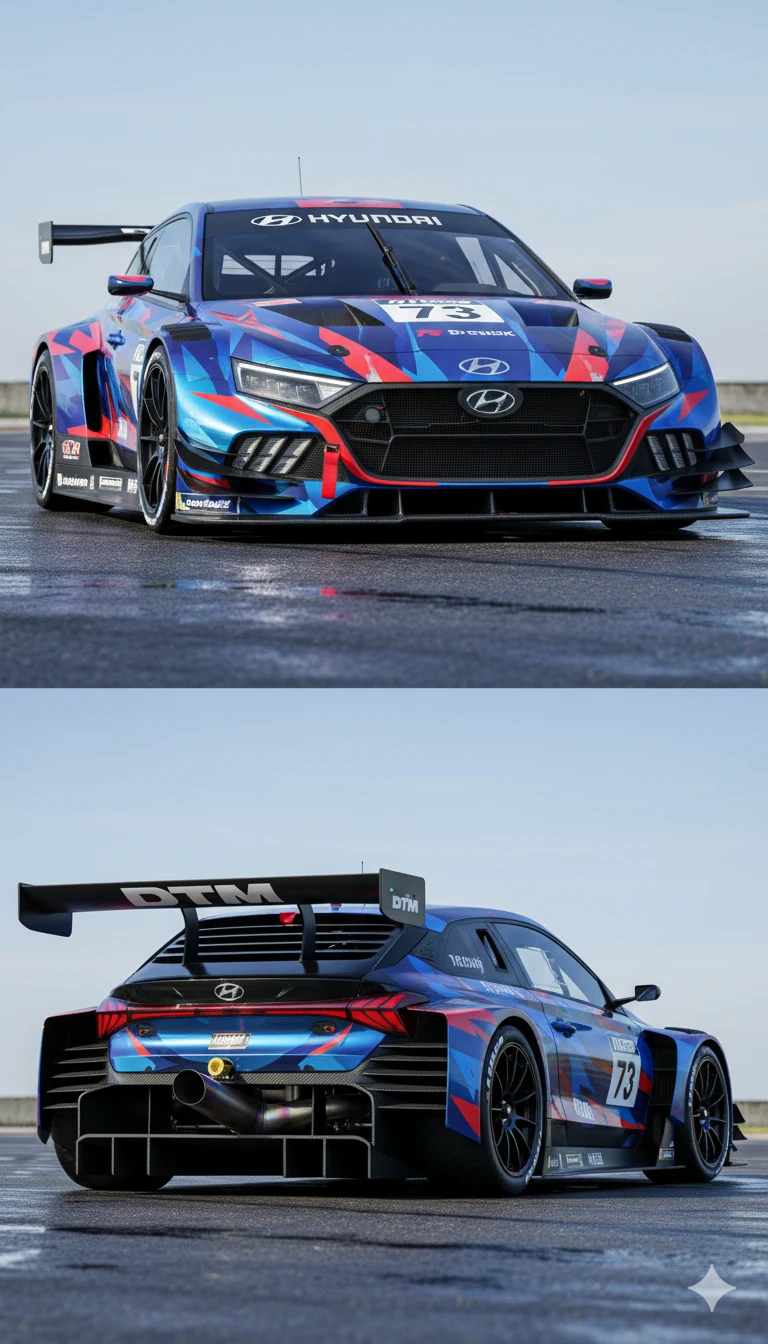
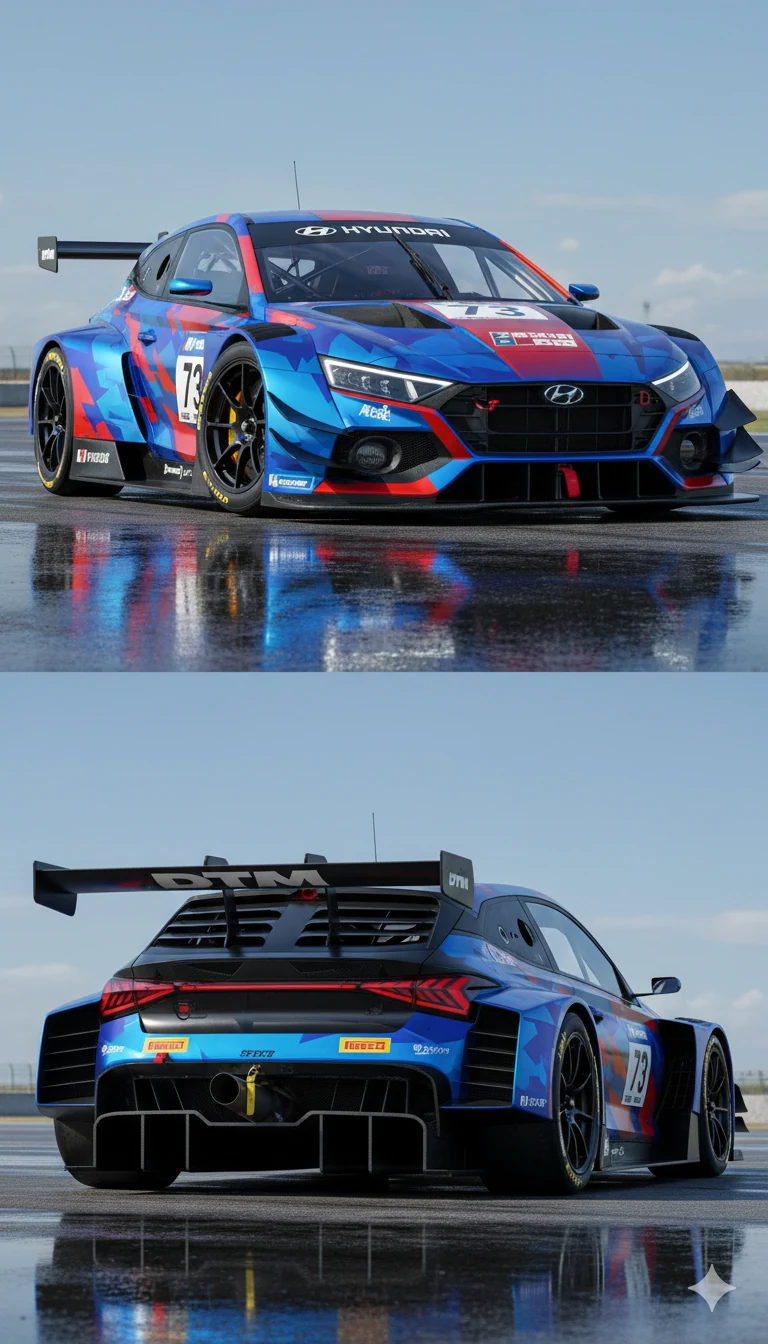
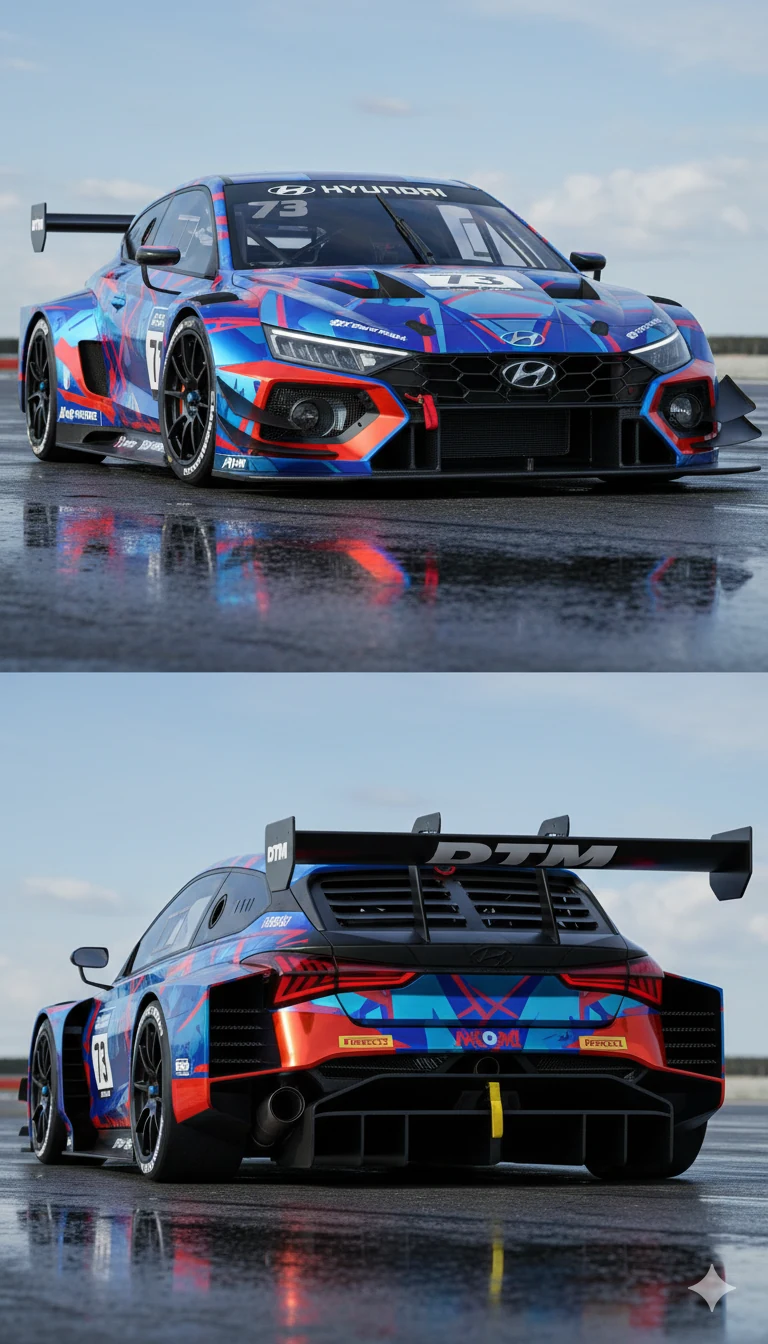
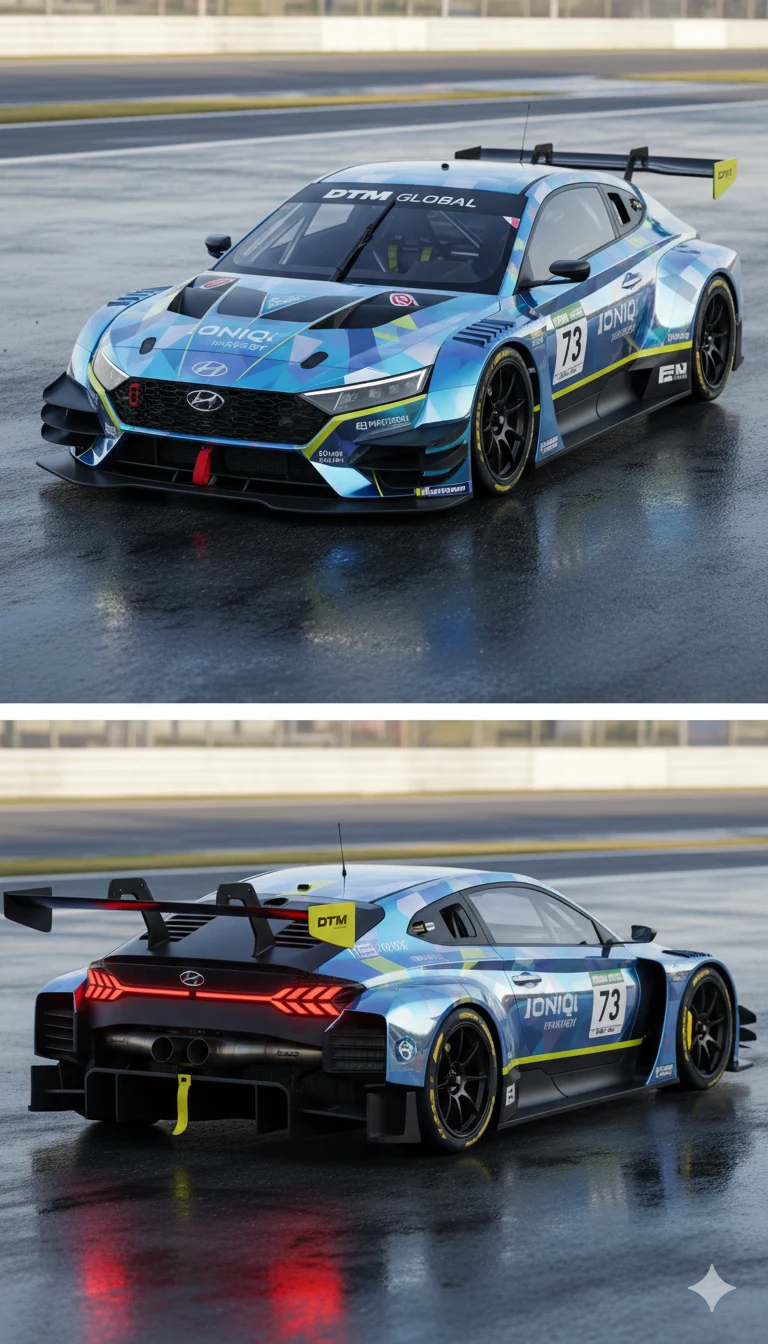
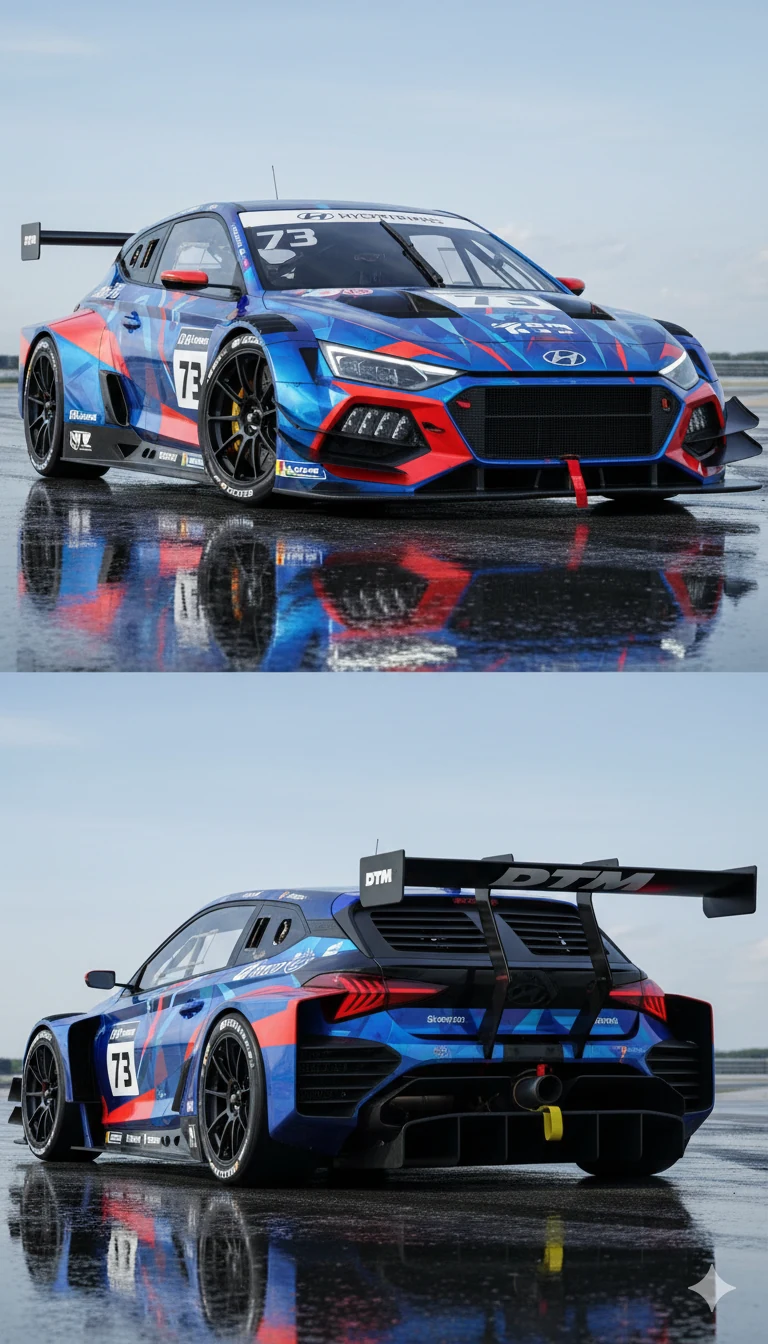
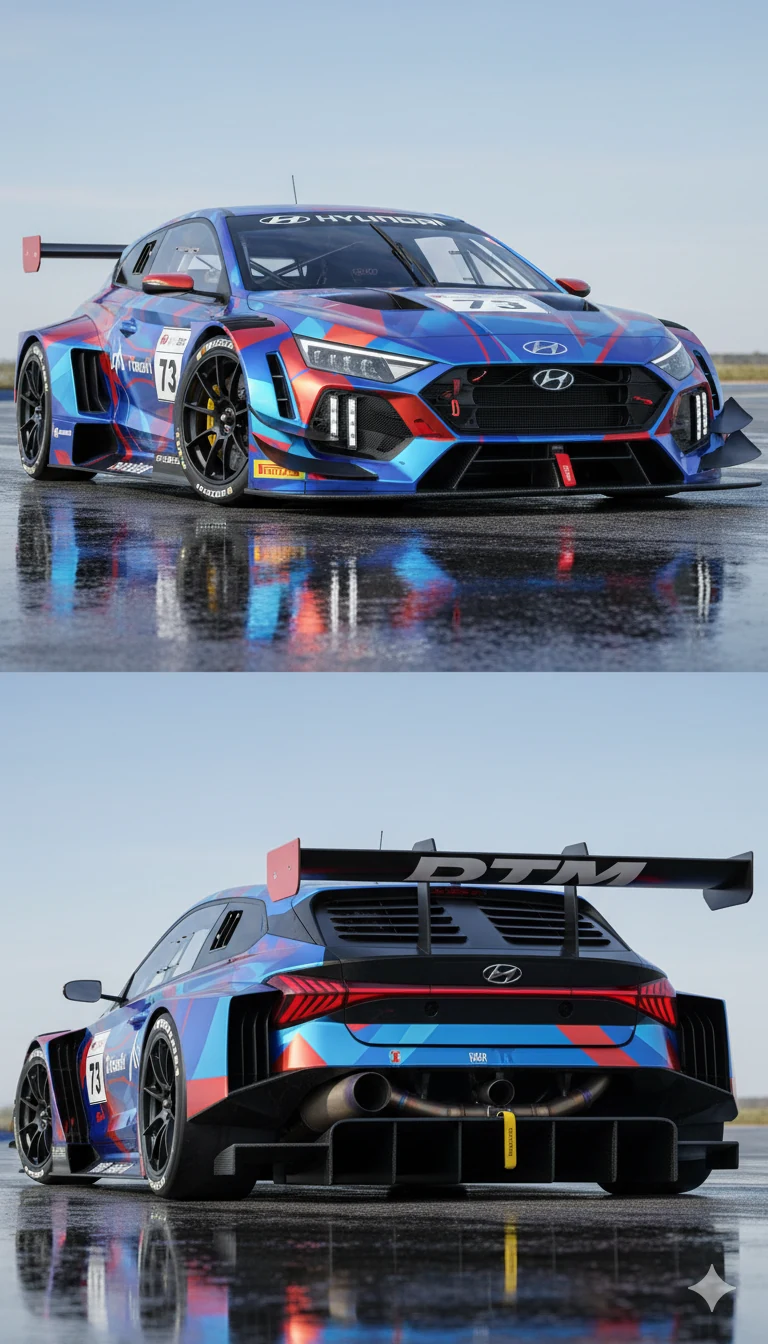
Hyundai i20 (2020-2023) — a sedan in factory form. The set below holds 10 renders of that same body rebuilt as a DTM build, so you can compare the changes side by side instead of taking them on trust. The donor car is the MK-3 generation, which is why the glasshouse and the shoulder line stay exactly where the factory put them.
Touring car design is the most disciplined of the race categories. The silhouette has to stay recognisable, so the changes come from the arches, the splitter, the rear wing and the ride height, all governed by a rulebook. Wheels are wide but not absurd, the body sits low and flat, and the aero is functional rather than theatrical. Liveries from this world are the loudest in motorsport, and they work because the shapes underneath are restrained enough to carry them.
Same donor car, different rules: every other Hyundai i20 build is one click away in the sidebar, and the DTM category hub collects the same treatment applied to other cars.
Questions about DTM builds
Why are touring cars so boxy?
The silhouette is regulated. Manufacturers are allowed to change arches, aero and ride height, but the roofline and glasshouse have to stay close to the production car.
Are the liveries part of the design?
They are half of it. A touring car livery has to work at 250 km/h from a grandstand, which is why the shapes are so bold and the colour blocks so large.
 Hyundai Santa Cruz8 renders
 Honda Accord4 renders
 KIA XCeed2 renders