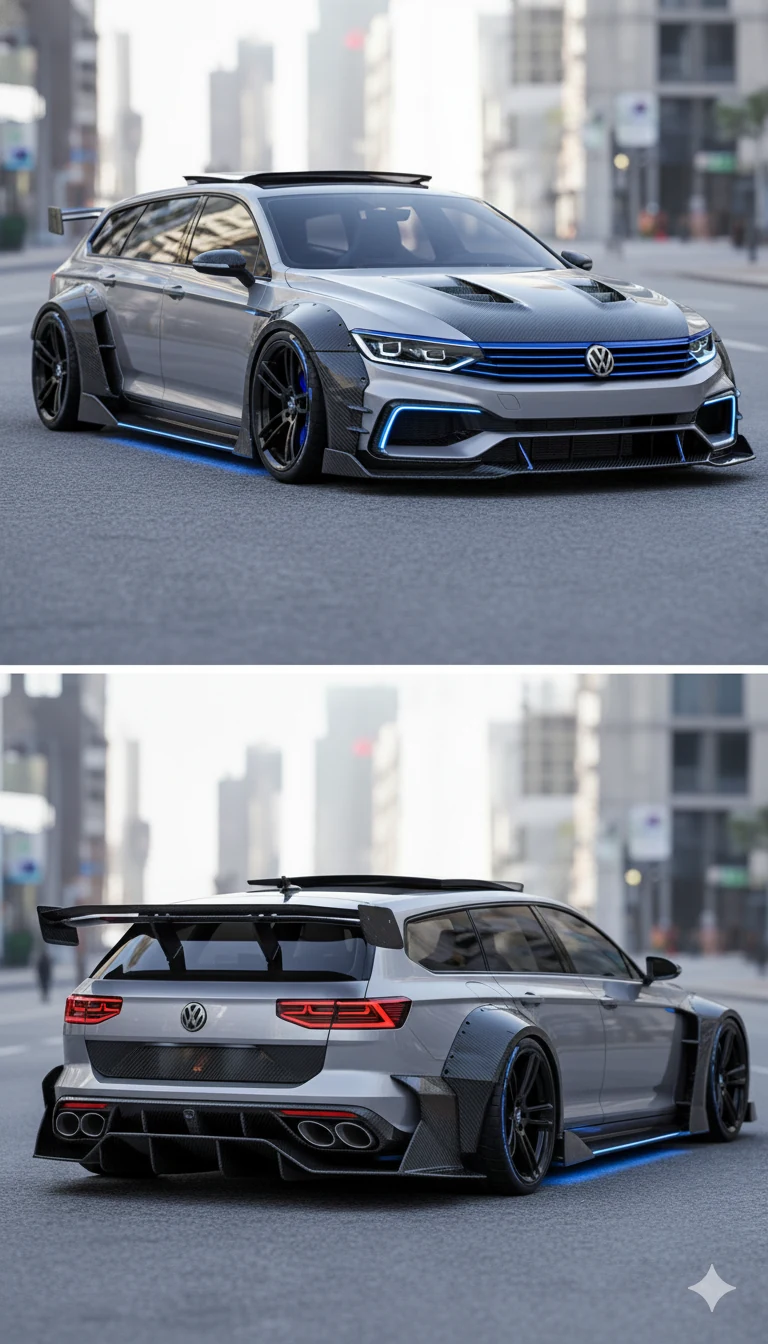
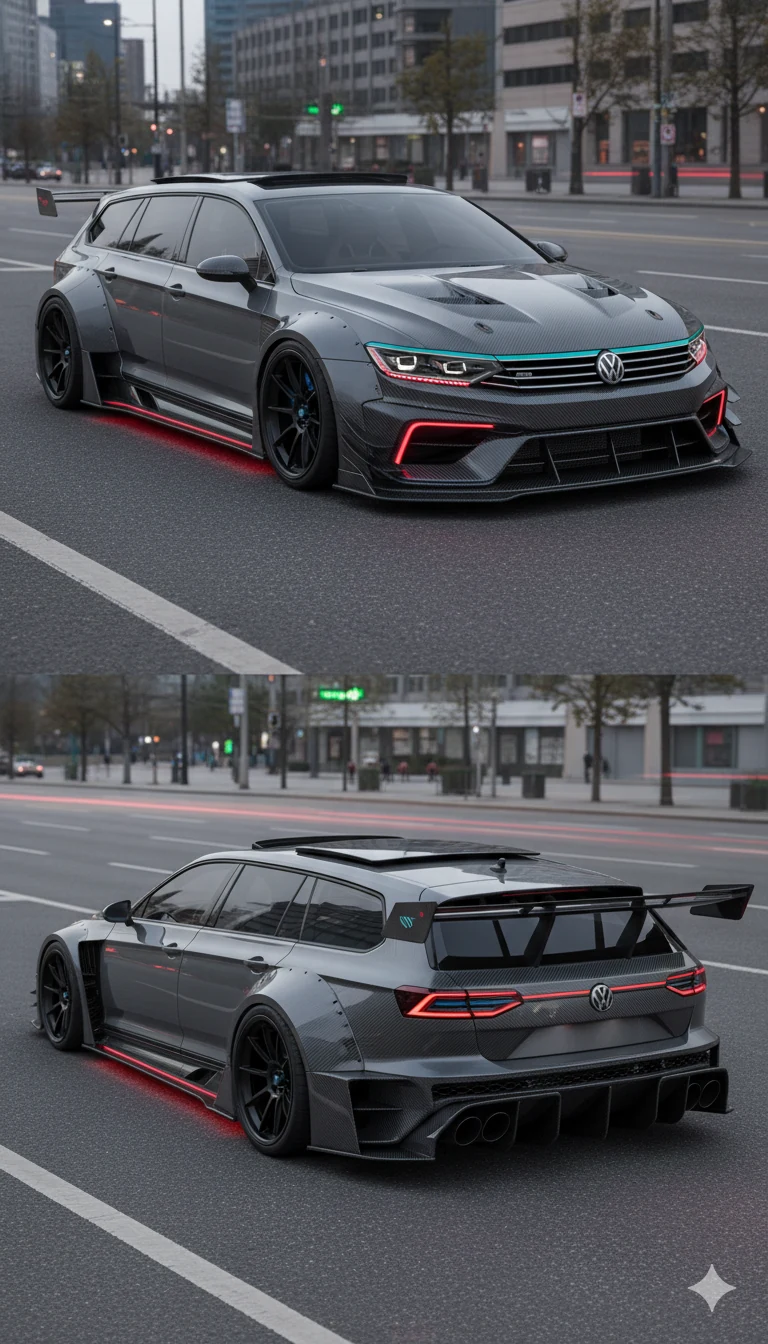
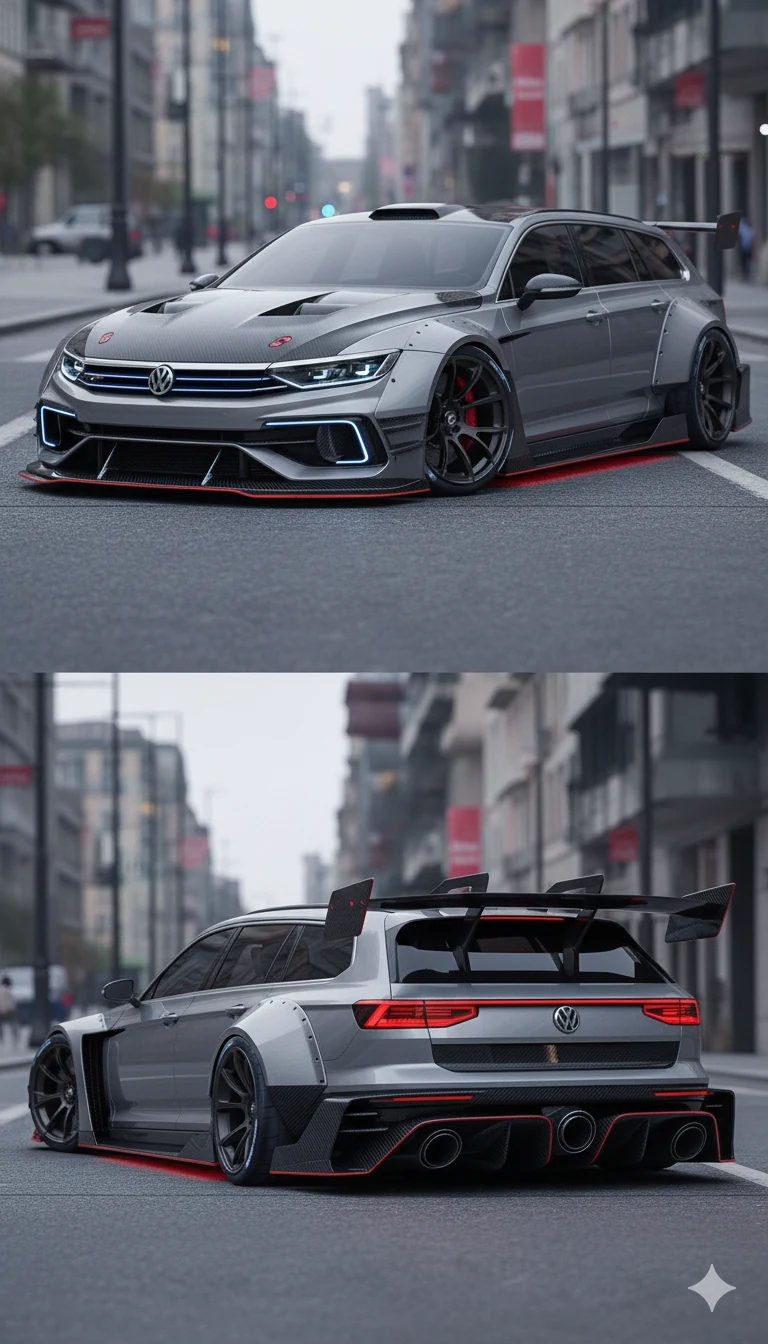
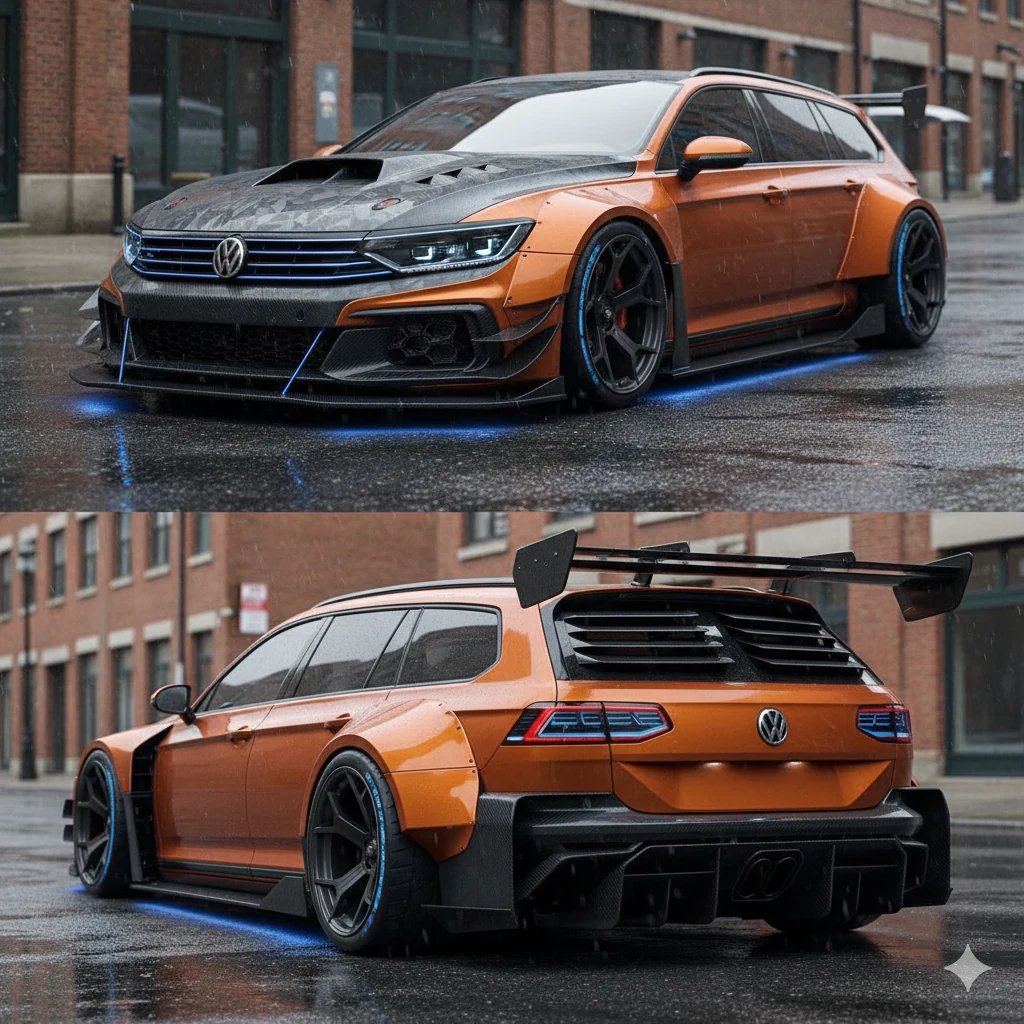
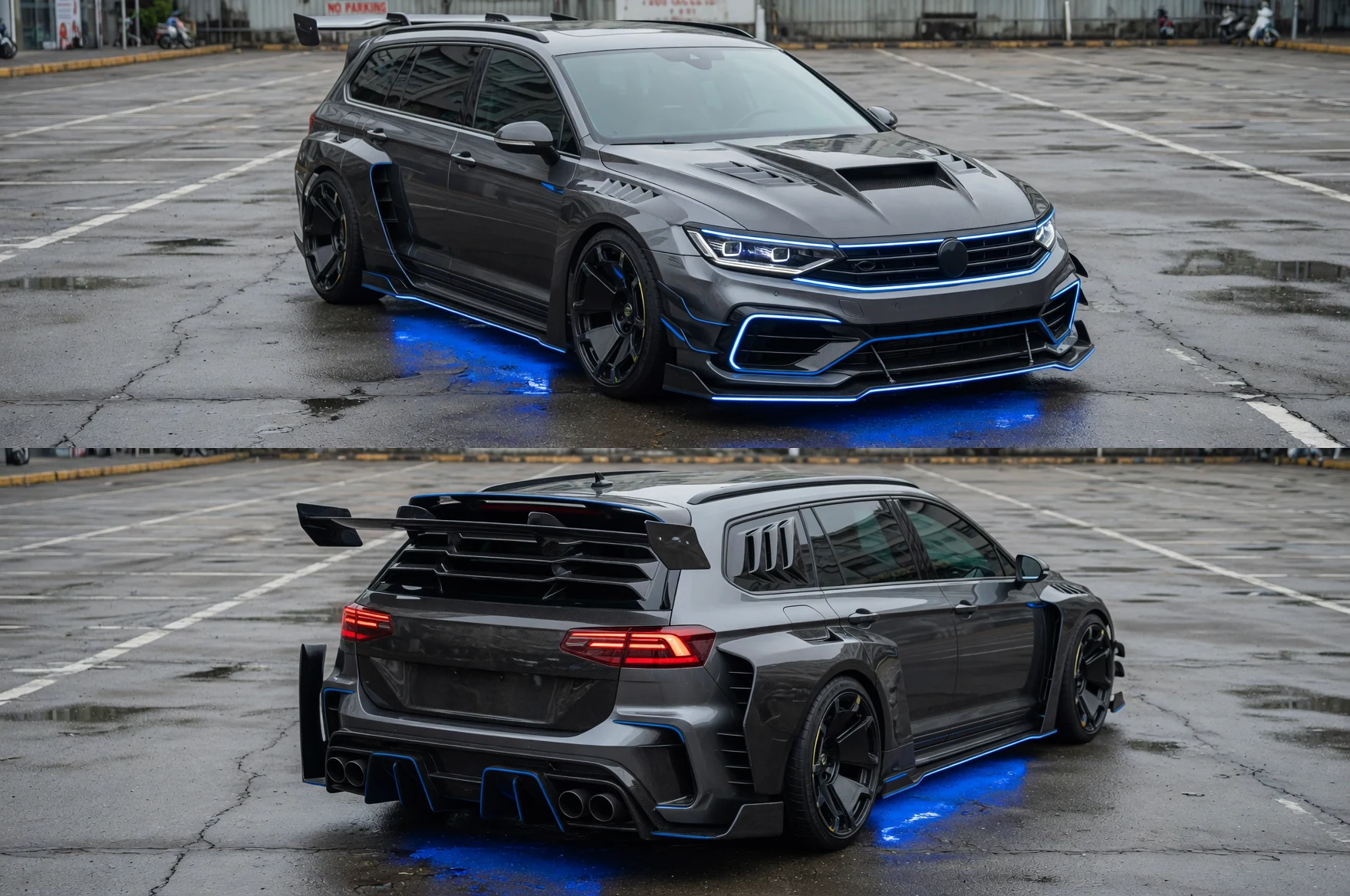
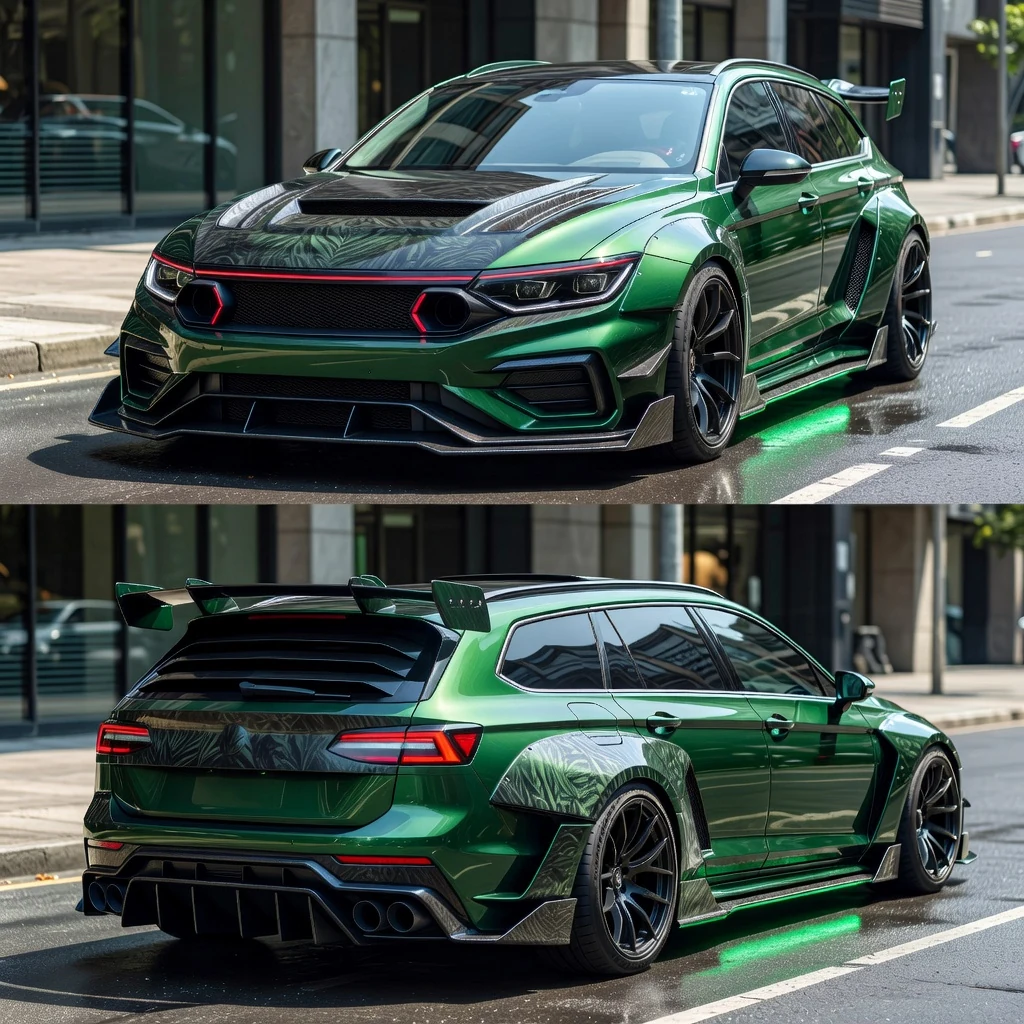
Volkswagen Passat (2019-2021) — a wagon in factory form. The set below holds 6 renders of that same body rebuilt as a Hard Mod build, so you can compare the changes side by side instead of taking them on trust. The donor car is the B8 Facelift generation, which is why the glasshouse and the shoulder line stay exactly where the factory put them.
Hard tuning is where the car stops pretending to be a production model. Wide arches are cut and rebuilt rather than glued, the track grows by sixty to a hundred millimetres, and the wheels fill the new space completely. A splitter, side skirts and a diffuser work as one continuous shape. Paint is usually a single saturated colour or a two-tone break along the shoulder line, and the livery is minimal because the bodywork itself is the statement. The interesting part is where the designer chooses to keep the original identity: the headlights, the grille aperture, the shoulder crease. A convincing widebody still reads as the same car from thirty metres away.
Same donor car, different rules: every other Volkswagen Passat build is one click away in the sidebar, and the Hard Mod category hub collects the same treatment applied to other cars.
Questions about Hard Mod builds
Does a widebody hurt the original car?
It would in metal. Arches are cut and re-welded, which is why real widebody conversions are done on cars that are already committed. Here it is only geometry, so the body stays factory-fresh underneath.
What makes a widebody look wrong?
Two things: arches that grow faster than the track, and a wheel that does not fill the new space. Proportion is everything in this category.
 Volkswagen T-Roc1 renders
 Volkswagen Passat8 renders
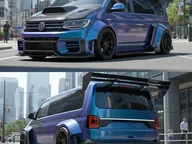 Volkswagen Transporter1 renders