Opel Insignia (2020-now) — a wagon in factory form. The set below holds 4 renders of that same body rebuilt as a WRC build, so you can compare the changes side by side instead of taking them on trust. The donor car is the B Facelift generation, which is why the glasshouse and the shoulder line stay exactly where the factory put them.
Rally specification is a study in compromise. The car needs ground clearance for gravel and grip for tarmac, so the suspension sits higher than a circuit car and the arches are cut to clear a narrower, deeper tyre. Mud flaps, a sump guard and a roof vent are mandatory, not optional. The livery carries the sponsor blocks that made the golden era recognisable, and the number panel sits where the rules put it. The trick in a good rally render is proportion: too much wing and it becomes a circuit car with stickers, too little and it stops looking like it could finish a stage.
Same donor car, different rules: every other Opel Insignia build is one click away in the sidebar, and the WRC category hub collects the same treatment applied to other cars.
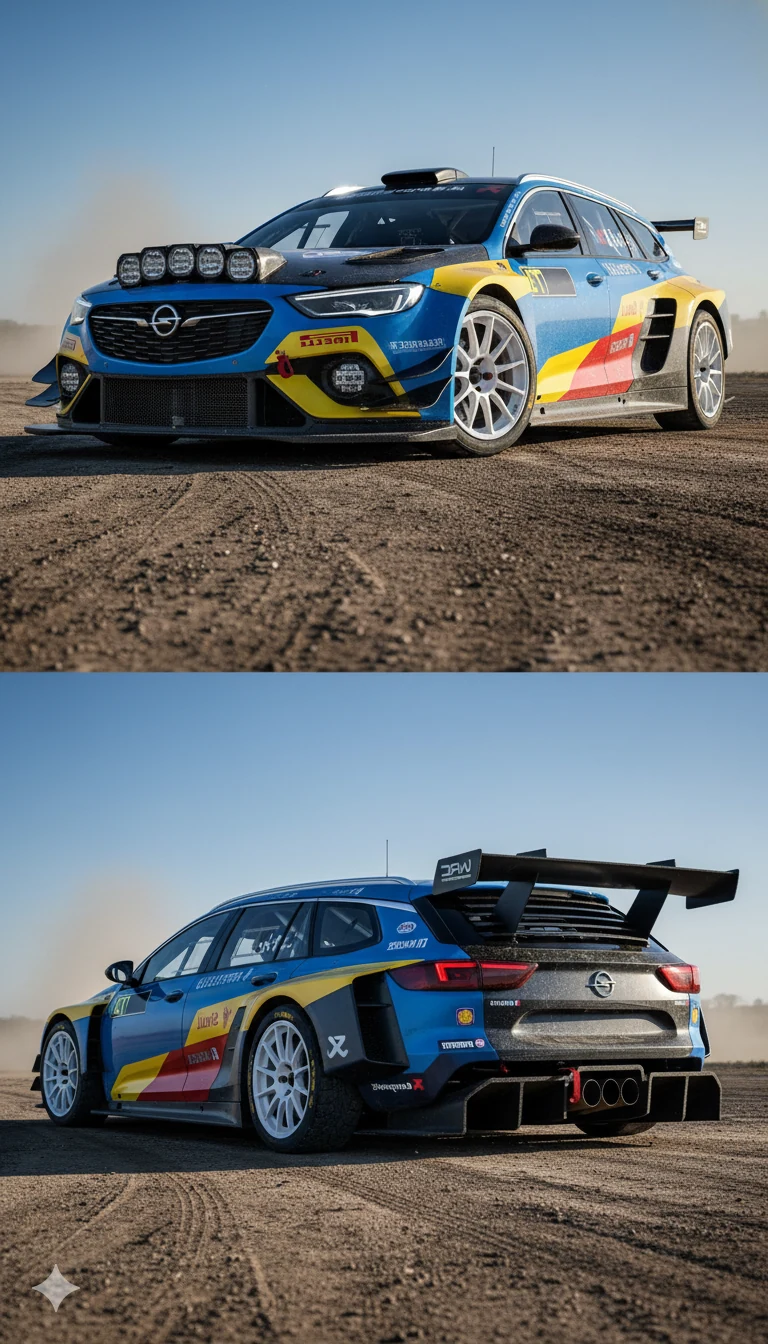
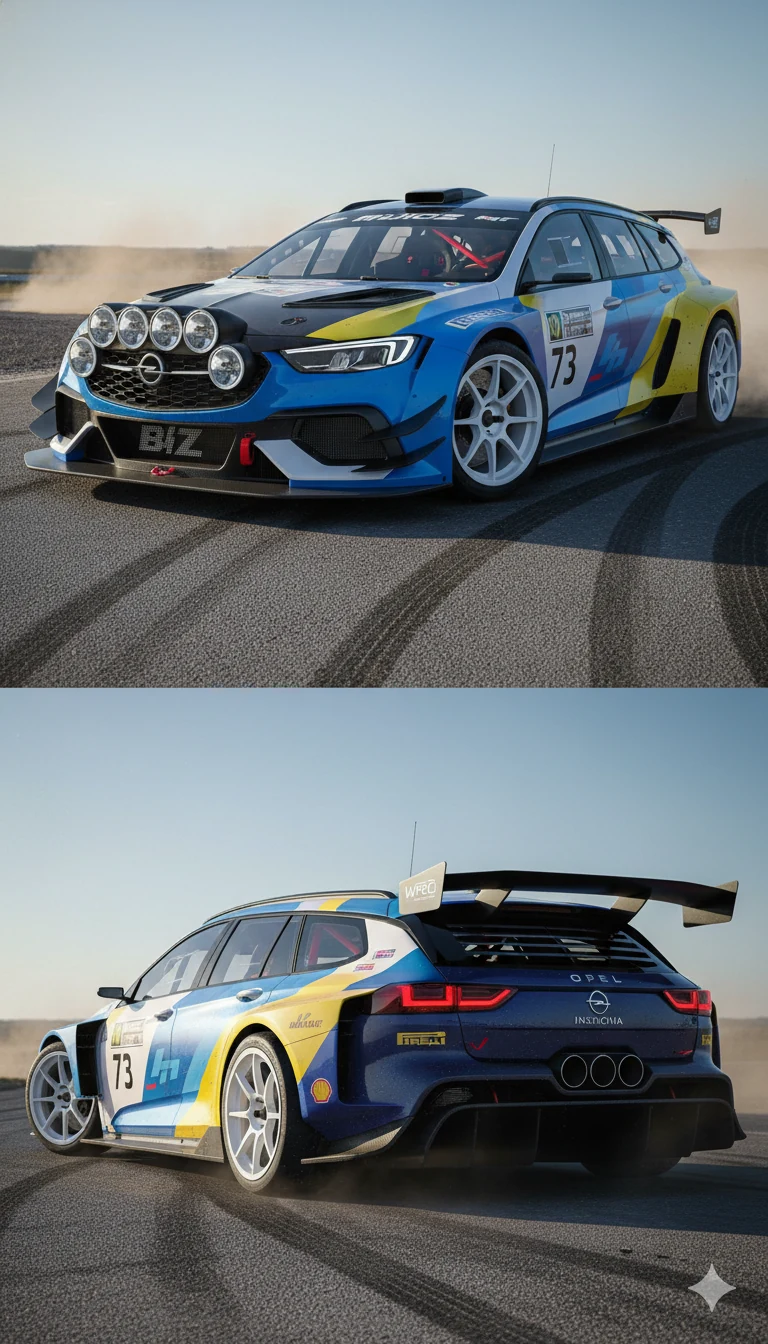
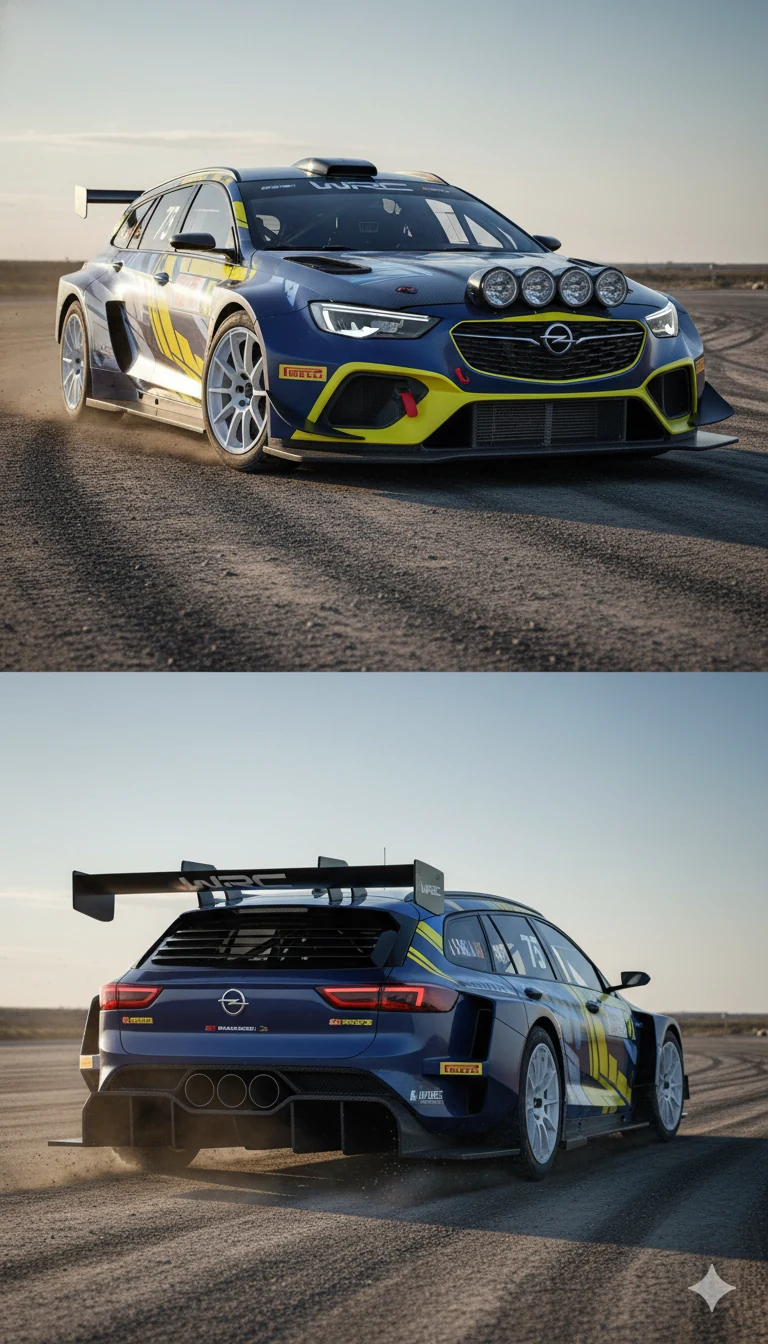
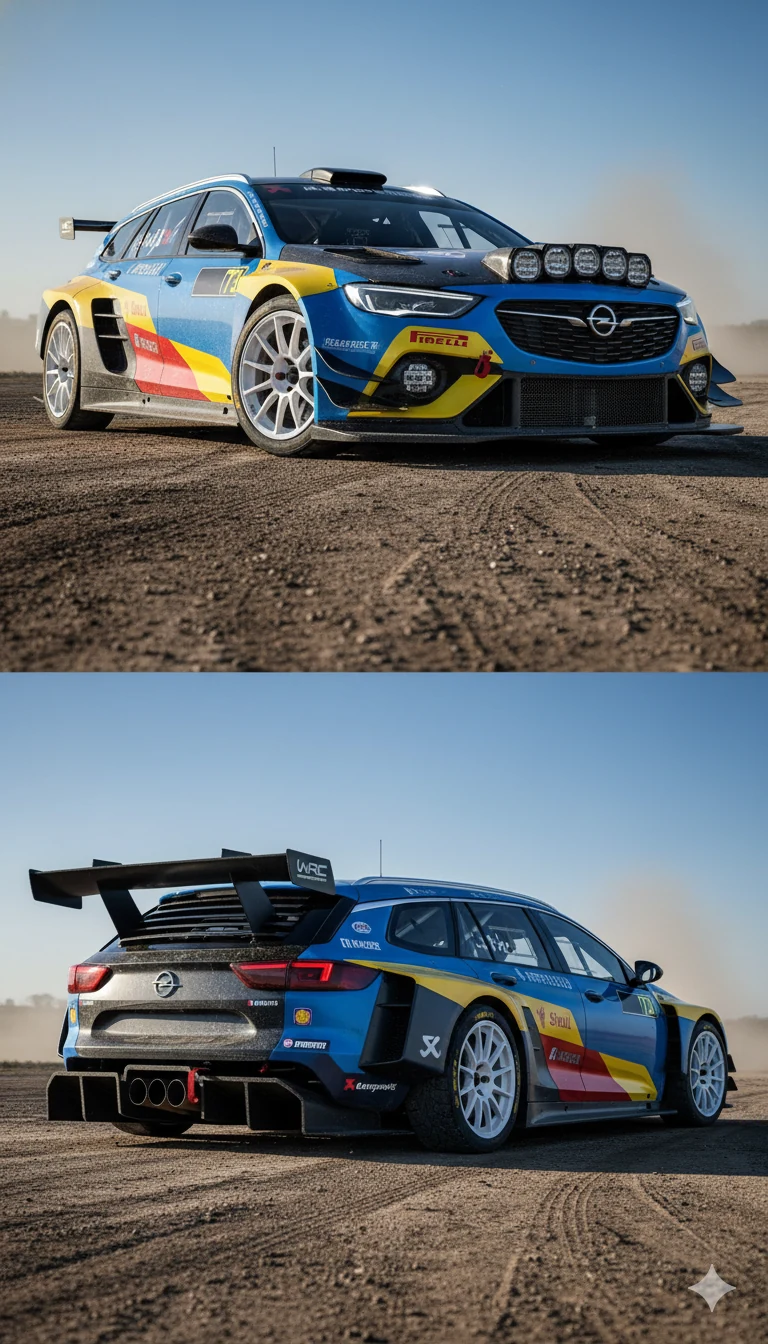
Questions about WRC builds
What separates rally spec from circuit spec?
Ground clearance and tyre choice. A rally car has to survive gravel and still turn in on tarmac, so the suspension travel and the wheel arch cuts are completely different.
Why do rally cars carry so many lights?
Night stages run without street lighting. Light pods are fitted where the rules allow, usually above the bonnet line to avoid damage.
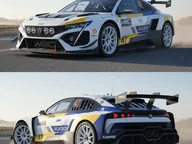 Peugeot 4085 renders
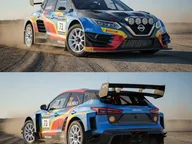 Nissan Qashqai5 renders
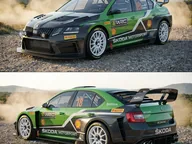 Skoda Octavia1 renders